I’ve got a problem with “Christians”

No photo description available.I don’t have a problem identifying myself as a Christian. I was born into the Church and though I’m not as active as I used to be, I foresee a time in the future when I will exit through it as well. I was brought up to understand the impact that a loving and forgiving God had in my life.  Throughout it, especially in times that were both the most challenging and the most rewarding, I have called upon Him in thanks, desperation, need and celebration. Most people who know me have heard nary a word of this coming out of my mouth because I was also brought up in a tradition that doesn’t see a need to throw it out in people’s faces when they’re not looking for it. Faith and belief are personal issues and I do thank God that I had a family around me when I was young that imbued a sense of personal responsibility and character along with humility, forgiveness and repentance.  And my immigrant grandmother who made sure I went to church every Sunday.
This is why I have such a problem with “Christians” today. Throughout history, they have failed humanity, themselves and their God in the name of Christ, or Jesus, or The Savior, or whatever moniker the latest sect chooses to identify Him.  For the most part, they feel justified in doing so.  And right now, they’re really pissing me off.  Especially the American ones.
I grew up as an Eastern Orthodox Christian where faith is a choice; correct actions are a choice and we were born with free will to decide how to behave. We also learned that as humans we are fallen creatures and our failings are the essence of our humanity: we sometimes make bad choices and finding grace in one’s life is the recovery from them. This concept was supposed to bind us together, this knowledge that we all fail, we all have weaknesses, but we would have this common faith in God and in ourselves to lift each other up.  It is the essence of what it is to be human.  But the Christianity that I see and hear in the national conversation is not the one I recognize; this one takes the position that we are kings of the universe and have an inherent right to force our beliefs on others, that “choices” are directed by God or Satan.  That our failings have been thrust on us from afar, that we are constantly under attack and must be ever vigilant to fend off the evil that can corrupt us.  This interpretation is what the the holy fathers of my faith would call an abomination, a heresy and my good friends outside of Christianity should take heart that these are not the central tenets of the true Christian faith.
The exercise of faith is a choice. You may be born into a faith and it may be bestowed on you by your family, but how you behave in that faith is your choosing, and following it means choosing to do so.  No one, particularly Jesus or Satan, are forcing you to make the choice.  You are responsible for your own actions against others and when those actions take you away from the path God has laid out in the teachings of the Old and primarily New Testament, you must find a corrective course to take.  Primary above all is the directive to love one another above oneself.  If you’re looking for the real meaning of Christianity, this is it.  A sin against mankind is in reality a sin against God.
This is where the concept of obedience enters.  While I’m not going to get into a theological debate about what obedience means, let’s just say that its a virtue and an excellent placeholder for other forms of preferred behavior like respect, honor and fealty.  This is as instructional in the governing of our behavior as the ancient myths of Olympus were to the Greeks: in every society on Earth since the dawn of time, something like “religion” has been created to codify behavior between ourselves, and the desired effect is obedience.  You only have to ask yourself “why” to come to an understanding that we as a species know that we are prone to failure to another and as a community, we’ve formulated ways to keep ourselves moving forward in time.  In Christianity, our job as the faithful is to use our limited time on Earth to get back to God when we “cast off this mortal coil”; for each of us individually to follow the path that His Son has laid out in those few years of teachings that had been revealed to us as our new covenant, or agreement, with God.   Therein lay the irony, because this covenant, The New Testament of the Bible, was  written down and interpreted by flawed humans hundreds of years later. (And wait…it was not translated into English until the 16th century!). This gets to the heart of my argument and it is the one that anti-Christian writers consistently use to challenge the core tenets of our faith: if the Bible is the “word of God”, and humans are so inconsistent and petty, how can we trust anything they’ve “written”?  How can you base a faith that has been at the heart of some of the world’s worst atrocities, that has been spouted by some of humankind’s worst offenders and used as a justification for bad behavior against ourselves?
My faith is theologically complex but simple in execution and understanding: Jesus was both God and man, he was born to a mortal woman and lived through our mortal life and our limitations, failings and temptations to show us the way back into his Father’s house.  In this way, Christ is us.  We do dumb, stupid things; we choose to succumb to evil; it is in our power to make the morally and ethically right decisions and we choose not to.  There is no “the Devil made me do it” about it.  But the Christianity I read about on the web and listen to on TV justifies every failing by twisting the virtue of forgiveness and repentance, turning the love of God and the force of evil into something anthropomorphic, each tiny being perched on opposite shoulders in a tug-of-war for our souls: angel vs. devil.  And by doing so, by creating this tangible division, it becomes all the easier to assign those roles to the others in our lives, those around us, those who affect in ways real and unreal.  The real essence of these twin forces, right and wrong, is to bring to front of mind the wrongness of our chosen acts so that we can make the correct choices, to not repeat the wrong ones. It is not about layering guilt on someone, casting them into the abyss, condemning them to eternal fire as a way of punishment.  Nor is it about promoting unrealistic assumptions of one’s goodness, creating demi-gods of unimpeachable integrity and saintliness, people who’s feet do not touch the ground but hover slightly above it so as not to dirty themselves.  Jesus himself wore rags and his feet were caked in dirt.  The lesson is about the acknowledgement that that both forces are within us, the power of good and the destruction of evil; the instruction is in helping all of us, who choose to believe, to lead a better life for ourselves and others by not repeating our failures, and understanding that we may.  In doing so, by placing the good of others above ourselves, we have followed in the steps of Jesus the man as he became the Christ, the mortal incarnation of the God of Abraham.  By failing again, we acknowledge that there is still wisdom to attain in how we lead our lives and that perfection can only be attained at the end of it with His help.  Jesus’ act of sacrifice, of giving himself over for us, is why we are Christians, an acknowledgement that are weak and our acceptance of this is our humility.  When we are humble, we seek to help others, not ourselves.
Or we should be.  What I see daily is a faith being hijacked, transformed, diluted, bastardized, and mutated into a gospel of individualism, power, greed and dare I say it, pure evil.  If a faith is based on the acknowledgement that we are formed with 2 natures, one of the earth that is destined to age and rot and come to an end; and one of “heaven” that is pure and immortal; then its inherent within that teaching that many of us will make the choice to fulfill our earthly destiny at the expense of our heavenly one. This is the inflection point of our faith: once we’ve chosen the wrong path, how do we find our way back to the correct one.
When you compare Christianity with every other religion on Earth, the paths are startlingly similar. Buddhism, Sikhism, Islam, Judaism, Hinduism, the teachings of many aboriginal and locally nativist faiths as well, all follow similar tenets. Love others, treat each other as you would have them treat you, be of service. These are not solely Christian or Abrahamic concepts, they are universal. Those without a chosen faith, whether atheist or agnostic, will find themselves on a similar path if they choose to be so, as these truths are self-evident in what Immanuel Kant called “moral imperatives”.
But there is a strain of Christianity that is uniquely American that is perverting these ancient beliefs. It comes out of the Scottish kirks of the 15th and 16th centuries that were caked with the harshness and unforgiving nature of Calvinism as a reaction to Anglican overrule from English kings; it was molded by the secular clashes in Northern Ireland in the 16th and 17th centuries that culminated in the antipathy of Protestants and Catholics. It was brought to America by the Scots of the Ulster Plantation of Northern Ireland, known as the Scots Irish, the largest ethnic migration of the Colonial era and forged in the harsh mountains of Appalachia and Allegheny. It was mixed with the Protestant Baptism of English settlers in the south and fueled by the guilt of human bondage in a slave-driven economy. It is founded on a patriarchy that is a perverted reading of the Old Testament and shaped by the irrational emphasis on the Apocalypse of John and the Second Coming. It believes in individualistic self-determination as if it were one of the Ten Commandments and interprets Jesus as if he were a hard-bitten, vengeful entrepreneur wearing buckskin and beaver pelts carrying a Winchester rifle through the Cumberland Pass.
Its early field interpreters were Charles Taze Russell, Aimee Semple McPherson, Billy Sunday, Fulton J. Sheen, Jerry Falwell and Billy Graham, each latching onto a part that allowed their own personalities to shine, to be the individual interpreters of the message of Jesus; its apostates were Jim and Tammy Faye Bakker and Jimmy Swaggart, each caught up in scandals; and its perverted extremes were the demi-gods David Koresh and Jim Jones.  Its present day incarnations run from Pat Robertson and Joel Osteen to James Dobson, Tony Perkins, Charlie Kirk and, God help us, Pete Hegseth. Thousands of self-appointed interpreters of the Word of God preaching in city storefronts and rural gatherings, huge mega-churches and TV ministries.  Each one of them preys upon the disjointedness of the modern condition of alienation and uses Christianity as a vengeful weapon against their own perceived injustices.  This is not Christianity. From the perspective of eons ago, this would be considered “heresy”. And it would have been condemned.
East–West Schism - Wikipedia
What happened is that the Protestant Reformation broke the hegemony of a centralized authority, the Holy Roman Church.  The Roman Church itself was born of the Great Schism of 1066, where the Bishop of Rome, the self-proclaimed “il Papa”, got into a dustup with the heads of the other 4 Christian autonomies (Constantinople, Alexandria, Jerusalem and Antioch) and ex-communicated them.  Thus Roman Catholicism was born in the West, and it cast its eye away from its Eastern peers, derisively known as “orthodox”.  Aligned with imperial power (starting back with Charlemagne), the Roman Church had a love affair with itself as an imperial power center, ruling all of Europe and Western Russia. Its as if the Church was staring at its sole image in a mirror for 1000 years.  At the Reformation in the 15th C,  the mirror fell and broke into a thousand pieces.  Now there were a thousand variations of that reflection, depending on who picked it up.  Instead of the unified and communal (and yes, corrupted) practice of faith, testament, interpretation and redemption, each individual got to make those decisions individually and chart their course as they saw fit.  They inherited their own personal God/Jesus/Messiah/Christ, and they shaped Him into their own image, not the other way around.
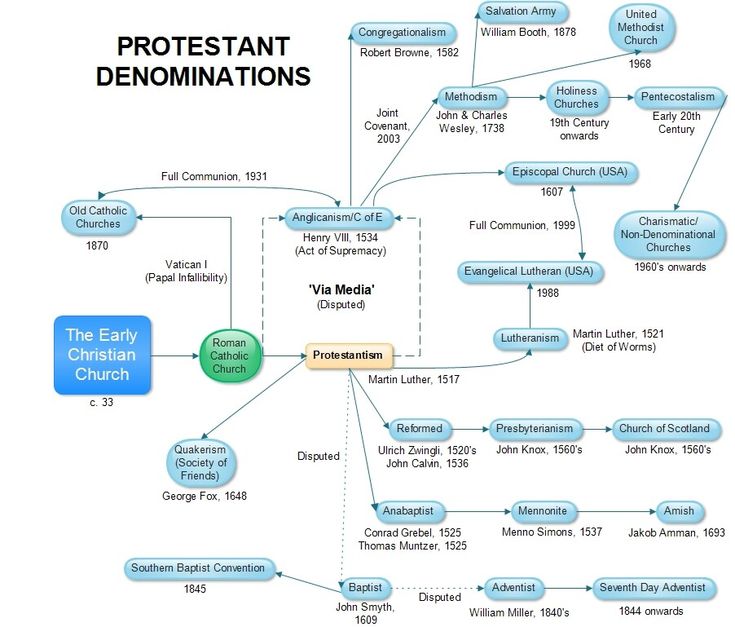
As the new wave of immigration from Europe poured into the new world of the Americas in the 17th, 18th and 19th centuries, these individual interpretations of Jesus/Christ/God (including the Catholics from Spain) formed alliances, rivalries, mergers, and antipathies, many morphing further from what actually was outlined in early Christian texts.
This particular map below is but a simple org chart of what followed:

On Protestant Denominations | Gene Veith

But wait…there’s more!
Each of these faiths made their way into the settlements, then the wilderness of the new world at a time when literacy was still nascent and inconsistent.  In Europe, the monks of the Holy Roman Empire were the learned ones who spent centuries decoding ancient Arabic texts into Latin, then to other Proto-Indian languages and cultures.  They took the early texts of the Christian faith (codified by 7 Ecumenical councils in the 5th and 6th Centuries) and created a unified view of God. The Church during that time held great power as a result.  After the breakup, as Protestant and Anglican sects formed and re-formed in the new world, the individual clergyman, typically the only literate person on a grueling cross-country caravan, continued to hold the keys to power and persuasion.  The only respite many of these hardy folk had, in the face of starvation, weather, tribal raids and disease, was the Word from the Good Book spouted by this lone interpreter.  Because he was “inspired”, “touched by God”, “imbued with righteousness” and “prophetic”, his leadership, and his interpretation of “scripture” was inviolate.  He was to be obeyed.  When you’re out on the prairie, constantly beset by survival challenges, you can see where that can lead.
This is the American heritage of Christianity: filtered through individual interpretations, each one its own revelation.  This is why there is so much spouting of passages from the Bible as justifications for bad behavior.  When I take a passage out of its original context – a passage that in and of itself is a proscription for whatever behavior I am experiencing – I can then, in essence, write my own Bible: the Book of Extracts.  When you look back at the examples I listed above of “prophets” and “seers”, it becomes evident why Christianity in America is not about Christ or Jesus, but about the interpretations of them by the inventors of neo-Christianity.
Here’s another chart to give you an idea of the impact of the “individual” :
All religious faiths on Earth are human creations.  Each one emanates from mankind’s eternal quest to understand the unknowable, to probe the mysteries of the human condition and natural conditions.  Throughout history, each of the beliefs went through a codification, in which behaviors, attitudes and comportments were agreed upon and set into laws by other humans of a similar mindset.  Each “founder” claims a secret connection to another world; a private whisper from a divinity. Many of their adherents and advocates claim a “divine” inspiration, something that can never be proven, assessed or measured.   During the days of the Holy Roman Empire, that spark was never individual, it was communal and passed on through a series of learned proscriptions that brought you to a specific place in your life where you were “worthy” to receive it, watched over and coached by your learned elders.  But the Reformation obliterated that hierarchy.  Now, if you are walking along a road alone and come upon the “the spirit of Jesus” and He hands you some golden tablets and tells you to start your own church, the only thing holding you back was your ability to convince others of your “truth”.  The next thing you know, you’re in a circle with others of the same mindset praying over a misogynistic, psychotic, convicted felon and serial liar and proclaiming him a Message from God.
And that, my friends, is American Christianity.

Gutenberg’s Disruptor

Here’s a thought for the day: in 1439 (or thereabouts) Gutenberg introduced the printing press. It made everyman a reader for the first time in history. Prior to that, in the western world especially, the act of reading and writing was not necessary to living one’s life, most cultures on earth lived by oral tradition and these special esoteric arts were kept secret and passed down mostly along the religious orders where power was concentrated. The monks and priests were the keepers of all knowledge and utilized it, with the reigning monarchs, to hold onto power in a top-down hierarchy to keep the masses in order. This is not a dissimilar scenario in Vedic and Eastern cultures, religion and power were equally co-concentrated.

Gutenberg’s disruption spawned two movements that realigned the face of culture forever: one was the Renaissance and the other was the Reformation.

With the Renaissance, western epistemology was now cracked wide open and not only made available but subject to revision by everyone. The horizons of every individual were broadened beyond their eyelids and own individual labor. The world became large for the first time in human history: there was now a visible past that spurred speculation of the future and the rush of thinking, invention, philosophy and commerce changed the world. It was the blossoming of humankind.

But the Reformation had the most immediate and consequential effect. It broke the hegemony of the Church and busted up the power hierarchy by pulling their God out of the hands of a few and placing him in the hands of the many. You no longer had to gather at a communal focal point to receive its message and blessings through the hands of the chosen select, a place where they could continue to exercise power as well. Consequently, the influence of those that held that power was diminished and when a disruption is this severe it spurs a defense. And so the wars of the Reformation lasted close to 100 years and with it realigned power, land, titles, holdings and creeds. It fragmented society into broad camps, into larger tribes now held together not by their relationship to a monarch or title, but by a common bond of thought in how one relates to the supernatural. “I think this way and you think that way and that’s where our fences are built”. Where the promise of the Renaissance would bring us together, the factionalism of the Reformation kept us apart.

In the 1980s (or thereabout), we created the Internet, the 2nd great disruptor after Gutenberg. Now, everyman is an encyclopedia, a single container of the world’s knowledge, a holder of individual epistemology that can be arranged and re-arranged as fits that person’s needs. There is now no longer a need for communal affirmation and with that, no space for communal regulation: “I, alone, make the decision what reality is and what it is to become. I, alone, interpret history and I alone create the future. I am bonded to you only by your affirmation of my reality. And that can change at any time.”

The individualism that was curried by the Renaissance but also created the factionalism of the Reformation has now been hyper-realized. The Renaissance created the friction of the “marketplace of ideas”, where human progress was spurred by a Darwinian competition of competing ideas with a common good. It recaptured the ancient Greek notions of beauty for the sake of itself, allowing art to flow. The Reformation huddled us into ideological camps, constricted creativity as it pressed it into service to whichever ideology it served. Both of these movements took place simultaneously and over hundreds of years.

And so the internet carries the same twin competing forces but in virtual time with no obligation to chronology. Its ability to unite us and its ability to fractionalize us are being carried out simultaneously, but this time globally and at a speed that our primitive brains are unable to comprehend. It has favored our individualism and as a result has created our boundaries, as the only collective trait we share is a mutual cognitive dissonance, the feeling that our perception does not meet reality.

So if you’ve read this far, here’s my plea: shut down your computer and go out and start a conversation with someone. Don’t talk about your job or your friends. Talk about art, music, or a crazy idea you had. Talk about a place in the world you’ve never been to and ask that person to speculate on it. Re-enact the promise of the Renaissance.

Things Lost

On 9/11.

Just to show you what kind of a weird day it was, a day full of contradictions in the ether of the unreal, the tragic and the absurd: my sales team was looking to close a $1.2M technology deal with Morgan Stanley Dean Witter that morning at 9:30am at their offices on 50th and 8th Avenue.  Myself, my regional and national sales VPs and 2 partners from an allied technology in from Baltimore had gathered in New York City to make this happen.  We stayed overnight at the Sheraton on Broadway to finalize our close strategy and button up our final presentation. Early that morning, we were having breakfast in the lobby restaurant when Andy got a call on his cell phone from his wife about an airplane that hit the World Trade Center.  In our minds it was a weird event, maybe a Piper Cub that got lost (“didn’t something like that happen with the Empire State Building back in the ‘30s”?), but we were engrossed in the discussion of the upcoming meeting.  Suddenly, around us, other phones were ringing and looks of concern grew on the faces that answered them.  Neither the restaurant nor lobby had TVs mounted.  We paid the bill and were getting ready to walk over to the offices when utterances, phrases and words started to erupt from diners about “explosion”, “huge fireball”, “terror”. Then my wife called, watching it all on TV and relating it over my phone, which in those days, was just a phone.  She was upset and scared and worried.

We’re standing in the lobby of the Sheraton by the revolving door and it looks like any other day in the life of New York City: people making mad dashes, tipping doormen, catching cabs, conversing in groups, paying the bill, laughing, etc.  We realize something of importance and tragic significance has happened downtown but we have no idea what, there is no TV, no newsfeeds, but we’re all on phones getting different stories from the other end.  It’s around 9:15 and it’s a 5 minute walk and another 5 through the building to the 37th floor and a signed contract and time started to move very slow as we stood there, each of us pondering the same question in our minds as we felt the pressure of the tick of the clock and the enervating pulse of the conversations, growing looks of panic and increasingly rapid movements of those around us.  We paused briefly, which was an odd thing to do for 5 sales guys on the way to close a deal.  Finally, Kevin, our national sales VP, broke the silence, turns to me and asks the worst question possible: “Robin, it’s your deal.  What do we do?”

Snapped out of my own paralysis I suddenly realized what was at stake: we worked for a tiny technology startup out of Mountainview, CA, a company like many others that needed every single revenue source; I was the sole Eastern Region Account Executive and I guided this highly complex deal from its inception from a hot lead and through 3 competitors over 10 months to emerge with favored vendor status, which meant that we survived the competition and only pricing and services stood in the way of victory, two items we were clearly ready to be creative with; that this was Morgan Stanley Dean Witter and the prestige behind this win was huge beyond belief for the company; that I was about to be lauded as a superstar because of the way I brought the business in, not to mention the financial remuneration behind this for me; that I had my good friend, Andy who was my immediate boss, here with his good friend Kevin, who we all reported to and who ran sales for the company; that he, in turn, brought in the 2 partner guys from Baltimore as our aces in the hole; that I had just lost another large deal a few months before that hurt me and the company; that we all needed this win. 

“We’re going”, I said, and we took our briefcases, suits and ties through the revolving door, out into the clear, warm and bright sunny morning of September 11, 2001 and crossed Broadway towards Eighth Avenue to do business.

In the crosswalk over the avenue, one of the partners from Baltimore, increasingly agitated about being out in the streets, was asking me, “what are we going to say, what are we going to do there”?  Everyone listened in and I stopped.  “I don’t know what we’re going to say, I don’t know what we’re going to do; we’re just going to go there.”  Andy jumped in: “We have no idea what their state of mind is, what their expectations are.  We know we have a plan, we’re going to go in with that”.  And that broke open the silence and then the plans started to emerge as we walked, the strategies and tactics and contingencies and all the reasons why this deal should go through, and we pumped ourselves with confidence.  Traffic coming down 7th Avenue was heavy as usual with Yellow Cabs, thousands of people crossing the street, clogging the sidewalk, vendors with their kiosks and carts gabbing with customers.  It was suddenly normal, another day as we rode up the elevator to meet our Morgan Stanley contact, Stephen.

In the upstairs lobby we saw Eddie the guard, with whom we had fashioned a casual friendship during our many visits to the office.  Eddie looked at us, stone faced and asked “what can I do for you?” in a stone dead voice. The first sense of dread started to flow.  “We’re here to see Stephen, we have a 9:30”.  We never had to go through this formality before, it was weird and awkward.  I used to show up, Eddie would smile or at least recognize me and just say ‘have a seat, I’ll call him”; sometimes we would pass the moments with idle chat and there was always a smile with the goodbye as I left after a meeting. “Does he know you’re coming”?  “Well, yes…we have a 9:30.”  And with that, he disappeared through the door as we stood rooted into the carpet, unable to move, unable to talk.  Over the ceiling and around the walls a darkness began to creep over me; it filmed over my eyes, it ran down my head into my mouth and dried out my throat and began to burn my stomach.  We stood silent, unmoving, stone-like in our own personal sense of right and wrong as Stephen came out to meet us.

“What are you doing here?”, he asked and with that the world started to change in ways I wasn’t yet sure of, but the look on his face and the tone of his voice told me that nothing would ever be the same again.  “I…don’t know, we were all here…for the meeting…and…we felt we should just come over… .”   “Do you know what just happened?” he asked incredulously and as I stammered out a response he blurted out, “the Tower got hit.  The World Trade Center was hit by an airplane and our affiliate Dean Witter has the 2nd largest trading floor in the building and all our people were in it and the building’s been hit, it got hit by an airplane…it was terrorists…”   I started to respond, then we all chorused our shock, dismay, sadness, how sorry we were.  We offered help, assistance, support, we vomited words out into the lobby as a pathetic balm and because we were all businessmen, because we were all salesmen, because we were trained to kill and never lose sight of the win, we put together the shell of “next steps” as a way to navigate our minds through the dark fire of this most horrible reality.  Stephen disappeared back behind the door to the inner office and as we rode the elevator back downstairs to a new reality.

Still ignorant of the information that millions of others were witnessing live on television, we got back to the hotel and stood at the lobby doors, talking on mobile phones to loved ones and listening with the other ear to the flood of comments from those nearby: the 2nd tower had been hit, they were both on fire, they were large airliners, passenger planes, terrorists were on board.  We’re in a panic, figuring out an exit, how to get home, where would the next planes hit.  If this was a terrorist attack, then it still might still be going on and considering we’re in midtown, only one thing crossed my mind: the Empire State Building, which during the dark days of the Cold War and the Nuclear Watch of the Reagan era always stood out to me as Ground Zero in an attack, a spot where not only would the most damage be done but would stand as the most symbolic of targets.

We all heard the next piece of news at the same time: a plane has struck the Pentagon.  Kevin dropped his cell phone down and looked up: “Fuck, we’re under attack.  We’re at war”.  Not knowing what to think or where to go, not knowing if we should panic or proceed calmly somewhere – we still had not seen a TV – I guessed that if that were the case, they’re going to lock Manhattan down by closing the bridges and tunnels.  Before breakfast, we all checked out of our rooms, left our luggage with the bellmen.  Now we had to check back in indefinitely so that we’d at least have a place to stay to ride this out, even if we were just blocks away from a possible next strike.  We extended our stay at the front desk where the agents exhibited a strange, otherworldly calm about the entire proceeding, as if none of this were happening.  On the other side of their desk the world was all still about hospitality and efficiency and the number of keys you’d like to your room.

We decided to use my room as our base and on the way across the lobby to the elevators I dialed up my friend Keith who I knew had an office in Tribeca near the attack and whether or not he knew something.  I had one of those Nextel walky-talky phones and he was on speaker, standing on the roof of his building looking straight at the twin towers, flaming, smoldering, smoking.  He’s telling me people were jumping out of the windows, the constant sound of sirens in the back against the angst and terror in his voice. We’re all standing around my phone looking at each other trying to process this and just as the elevator door closed behind us he started screaming “they’re falling, the World Trade Center is falling, its falling” over and over and over “its falling”, then “I gotta go, I gotta go, gotta get home, get home, you get home, you hear me? Get home” and he went silent.

Back in my room, 90 minutes after it all began, we saw what the world had been watching from the beginning: the close-up of the remaining tower, burning alone on a clear blue background, not a cloud anywhere except from the smoke; the replay, over and over of the North tower falling, crumbling, belching smoke at it collapsed.  The endless replay of footage of the first plane, now available on newsfeed, crashing into the first tower, scenes of panicked people on the ground, covered in dust, moving aimlessly in every direction. 

Then, as the Baltimore guys made panicked calls on the room phone, talking to family; as I made plans with my wife to pick up our daughter from school and where I would meet them when I got back, assuring her I was alright, we saw the TV image of the 2nd tower, following the first, evaporating in mid-air; the stunned, panicked voice of the news announcer trying to maintain composure as he presided over an event more tragic and horrifying than one can imagine.  All 5 of us were yelling, shocked and horrified, with the one Baltimore guy pleading with his wife to stay calm as his face got redder with fear and frustration.  We were trapped in the false security of a hotel room, 7 miles away from Armageddon, one part real, one part a simple TV image and no one knew how to act.  Like the rest of the world, we were frozen in time, trying to understand and comprehend.

We were 5 adult men in suits and briefcases in a small hotel room, and the anxiety was so thick we were smothering each other, exacerbated by the panicky call the Baltimore guy was making. Finally, Andy pulled me into the bathroom and said, “look, I don’t know if this is my last moment on this earth or not, but those (Baltimore) guys are driving me fucking crazy and I’m not going out like this. We have to get out of here. We have to eat something, no matter what happens, we have to eat something.” And in a dumb haze over all that was going on, I instinctively said, “the Carnegie Deli is up the street, let’s go there.” And so we pulled the Baltimore guys away from the TV and the phone, got in the elevator and out into the street. 

Broadway at that point was blocked from traffic, empty, eerie, the bright sun overhead. Now, the first of the “walkers”, the eye-witnesses at the site, covered in dust and ash, were making a slow, zombie-like shuffle up from their origin point downtown, miles away. Men and women with jackets off or around their arms, holding shoes and pocketbooks and briefcases, heads down, exhausted and beaten, moving north up an empty street.

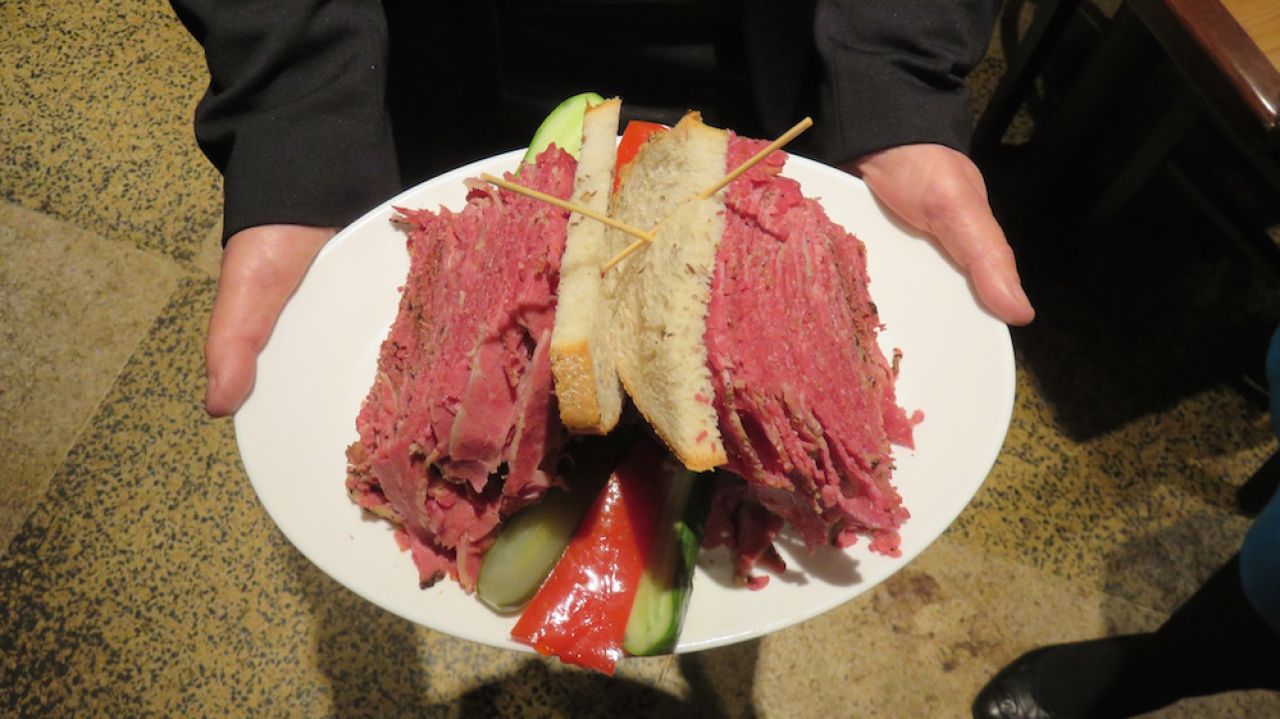
Here’s what a lot of people don’t know about New York City: at any given moment, it exists on several different geometric/time planes, it’s so dense and so massive that multiple events occur and overlap each other with a juxtaposition that can be sometimes unnerving and jarring, other times amusing and surreal.  The stream of workers passed by a sidewalk café next to our hotel and there sat a young couple, oblivious to what was going on, smoking cigarettes and drinking mimosas.  So when we opened the door of the Carnegie Deli, coming from the sunlit, empty fearfulness and panic of Broadway there was no way of knowing we would enter a darkened, lively, noisy and buzzing environment. Deli workers were cutting and serving meats behind the counter; waitresses and busboys cutting in between tables with arms full of platters and water tumblers. People were talking, there was some mild, personal laughter between some, waitresses were calling “honey” this and “sweetie” that, taking orders, cutting sandwiches, wrapping the rest, asking for more Coke, clearing tables, all the sounds and feelings of another day in pastrami paradise surrounded by TVs mounted on walls that showed a smoking ruin where tall buildings once stood. No one was really sure of exactly how many people died, we had no way to assess what we now know as the cruelty of that day. I actually was very hungry and I finished that corned beef. It may have been the best sandwich I had ever eaten.

How surreal, the tiny crumb of normalcy that everyone in that restaurant forged with each other out of a pure human need to make a small connection in the face of enormous fear and tragedy. Both the WTC and Carnegie were world famous icons; the towers gone now for 20 years, and the Carnegie now empty for 2. I can get a good pastrami in a lot of places, but I don’t think many can deliver what that deli did that afternoon.

pastrami

We made a new plan: get across the river to New Jersey. Andy and I lived there; Kevin, from California, could stay with Andy and the Baltimore guys could rent a car to get back. We would go back to the hotel, grab a cab and, hearing that the Hudson River bridges and tunnels were closed, would steer over to the Bronx and head north until one of the other upstate bridges were open. We would cross over and come back south to New Jersey to get our cars, and where the Baltimore guys could get the rental.  On our way back to the hotel, we saw a limo sitting at the curb, and in another one of those two different planes of reality moments, the driver was purchasing black socks from a corner street vendor.  In the middle of this disaster, one needs to be well dressed.  One of the Baltimore guys approaches him, they talk for a moment and he turns to us to say, “get in”.  He struck a deal: $500 in cash up front and $1000 on his American Express for a ride back to Baltimore, dropping us off in Teaneck for our cars.

We headed uptown and over to the FDR with the intent of crossing the Willis Avenue bridge to the Bronx over the East River.  But the driver heard on the radio that the George Washington Bridge had just reopened, so we kept going to the east side approach to the bridge.  This would be easier than we thought, and I made a quick phone call to my wife to let her know I was coming home soon.  As we spoke, we crossed over the upper level span of the bridge. I looked south and dropped the phone down.  On this bright, blue, beautiful, late summer day, at the tip of Manhattan in a view I took for granted just the day before, the twin World Trade Centers were gone, replaced by two white clouds that were being pulled by the wind over Brooklyn.

May we never forget.

Robin Robinson
September 11, 2XXX

Why They Served, Fought and Died

We have come upon Memorial Day 2020 in the age of corona. Its the traditional first day of summer, and across the country, people are in an argument as to whether or not they should be allowed to go to the shore and get their nails done. We, as a country, have long forgotten the exact reason we celebrate this holiday, other than to parade old men holding flags down our main streets as a form of honor and reverence; followed by the mass consumption of burnt meat. And on the Tuesday following we return to subjecting these heroes to the indignities of old age, to live in their own memories alone and away from us. What did they leave behind for us to hold onto? What was flying above them as they hit the beaches of Normandy, Anzio and Iwo Jima? It wasn’t a flag I can assure you. It was an idea that all of us bear a responsibility to each other to participate in the idea of a democracy to achieve the idea of freedom. And ideas, being non-corporeal and mutable, have the most difficult time taking hold if they aren’t universally acknowledged and practiced.

Soldiers participate with the highest risk and each individual service carries with it the most potent form of this idea: a human being risking harm for an ideal. There’s no second guessing the nature of the participation: if you’re in a uniform, it carries mortal risk. When we vote, we participate as well, and perhaps the voting polls would swell if there was something more physically tangible at risk if we neglected to do so. But there isn’t which is why so many of us rationalize our neglect of this exercise.

The one form of participatory democracy that gets routinely ignored is jury duty. It is derided by many as “already rigged”, “boring”, “a waste of my time” and in terms of avoidance ranks lower than voting only because you are legally mandated to answer the summons of duty. But if your local community did not send out a summons, no one would serve and the jury box would be routinely empty. While I did not choose to serve in the armed forces, and while I strive to make sure my vote is counted, the biggest civics lesson of my adult life was learned sitting in the jury box. I served on 2 separate juries, one criminal, one civil; one in Brooklyn and one in Los Angeles. And in each case, the lesson administered by the judges, was the same, simple and supremely valuable: be sure to listen and be careful how you speak.

When charging the jury with the case, each judge (a woman in Brooklyn, a man in Los Angeles) gave the us the same instructions. After the first time I realized I’d heard parts of it in countless plays, TV shows and movies over the years, truncated to fit the time constraints of drama. After the second time, I realized how critical it was not just in the deliberation room but to every interaction we have with each other.

In a manner of words, as I paraphrase, each judge instructed us similarly: “there is a reason we don’t allow jurors to take notes: the individual perception you have of the proceedings in court is what makes the strongest collective agreement to the outcome of justice. Each of you heard the same words but perceived it differently according to your own backgrounds and biases. So in acknowledging our differences, it becomes critical that you intently listen to your fellow jurors and consider with gravity what each has to say. The words you form to express your perceptions made here have meaning and consequences in the deliberation room. Therefore, do not leave this jury box with your mind made up, for if you speak that decision too early in the deliberation, and new evidence is put before you in the form of someone else’s recollection of the same events, you will, because of pride, be reluctant to change your mind, fearing that you will have lost credibilty. And then justice will not have been served. Truth is not secondary here, but truth is dependent on justice being first, and justice is best served when people of different perceptions come together in full agreement.”

I don’t think I’ve come across wiser words ever spoken to me. When I put those words together in the everyday practice of life, I can think of no more beneficial way to interact with other people; no better form of communication skill, no more constant form of persuasion, no better way to honor the sacrifice of those we raise a flag to once a year. Everything from our personal relationships to our business affairs to our participation in various govenmental forms depends on carrying out the wisdom of these words.

But many of us never get the chance to know this wisdom first hand: not just the hearing of the words, but the opportunity (and duty) to put them immediately into practice. It takes patience, empathy, humility and a lot of self-control, qualities that have slowly evaporated in the public life we share with each other. If we don’t know this wisdom then we can’t claim full participation in this idea we all share. Every loud protestation of our “rights” in the public arena will ring hollow inside our heads, causing a cognitive dissonance that keeps us agitated. And when that agitation finds its normalcy in you, we become ripe for the plucking from any grifter that promises to take that agitation away.

Memorial Day. Full of more honor and lessons that lie deeper than just waving a flag.

Enjoy your hot dogs. Wear a mask in public. And don’t scream about your rights being taken away if you’re not protecting someone else’s.

A memorial tribute to Jerry Stiller: 5/11/2020

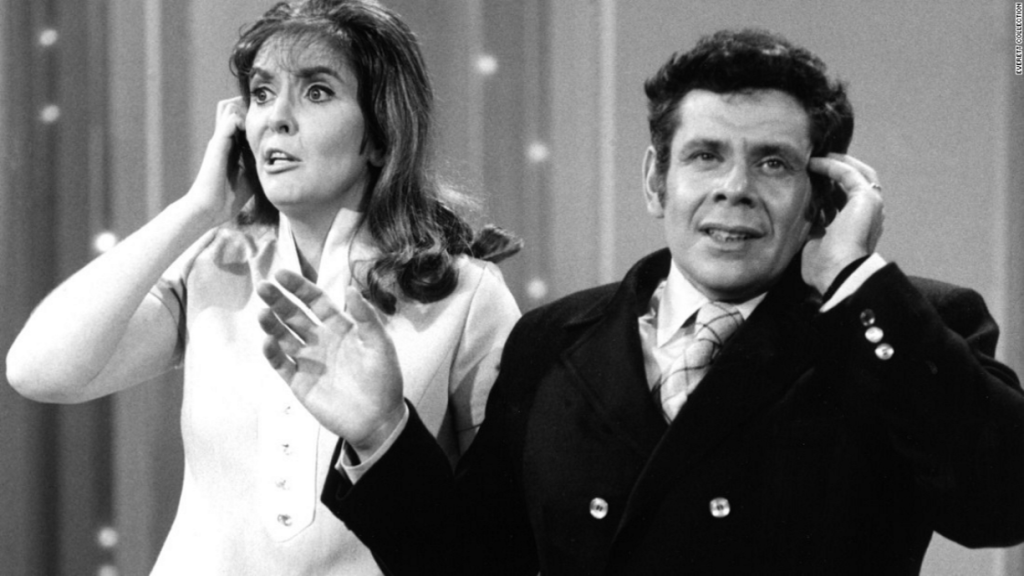
Stiller and Meara “on the phone”

In the years before Seinfeld, I was performing a strange little comedy off-off-Bway called “Erpingham Camp” by Joe Orton. In the cast was Amy Stiller, Jerry’s daughter. One night her entire family showed up in support of her. We met them all in the dressing rooms afterwards and Jerry graciously invited me along for drinks afterwards with one or two fellow actors, Amy, her mom Anne Meara and her brother Ben. Ben mostly glowered at the table until he left early. He had just achieved a bit of stardom on Broadway in “House of Blue Leaves” by John Guare and maybe he didn’t like sharing attention with his sister; or maybe he considered off-off-Bway actors too low rent to be seen in public with. Mom Anne Meara was a bit cold to me and I think she thought I was interested in her daughter (I was not) and was already giving me the once over. But I got to sit next to Jerry at a big round table and it was one of the great experiences of my career. He was expansive, animated, interested in everyone’s story (and every actor has an extended version of it) and genuinely excited to be with us.

I grew up watching the comedy team of “Stiller and Meara” on TV, watched their countless appearances on the Ed Sullivan Show and other variety programs. Like Nichols and May (and before them Burns and Allen & Lucy and Desi), they were the vanguard of domestic comedy routines; where Nichols and May were intellectually ironic and biting, Stiller and Meara was closer to The Honeymooners, with working class domestic issues, a running gag of mis-interpretations and man/woman differences in POV. They were masters of timing, the double take, the frustrated long burn, but most importantly, progenitors of the form of comedy at that time, ala Borscht Belt: quick, to-the-point, a predictable arc that was always buttoned up at the end. Its how I learned the form.

Throughout the evening I questioned Jerry about the early days in Greenwich Village, sharing the stage with Lenny Bruce, Mort Sahl, Lord Buckley, Bob Dylan and peers like George Carlin, Richard Pryor and Woody Allen. They played the Cafe Wha? on MacDougal, Folk City on W. 4th, Top of the Gate down the street from it and other venues that are long gone from the scene. It was an exhilarating walk through the time period that drew me to New York and I was laughing and drinking with the royalty that spawned it. The world of comedy had gotten sharper and younger at this point and Stiller and Meara weren’t seen as often as they were just a few years ago, perhaps they were considered corny and old school by comparison to Robin Williams’, Carlin’s and Pryor’s edgy push of the envelopes. So they were in a middle zone, with Frank Costanza waiting in the wings to emerge in just a few short years.

Of course the evening always comes to an end. Anne warmed up a little but was anxious to usher Jerry out of there lest we eat up his entire night. As we said goodbye, he gave me a quick look and said, “you’re funny, keep it up”.
If you play golf, you know that there’s one stroke you do in 18 holes that’s so perfect in form and movement, so exhilarating in its accuracy that you keep coming back to try to repeat it. That was the effect of those 5 words for me. I remember that look, that handshake and those words like it was yesterday and it was the psychic food I needed to keep pursuing my craft and career. The next day, before the show, Amy winked at me and said, “Dad liked you”.
See ya, Jerry, and thanks.

“You’re funny, keep it up”

Apple admits they’re stealing from you

I’ve been involved with technology since the early 80s and in all this time I’ve never owned an Apple product except for an iPod, which I admit I really liked. While I appreciate and admire the elegance and usability built into their products, I have deep-seated philosophical differences with Apple and its founder Steve Jobs. Apple touts the integration between platform, software and hardware as its chief design difference; the elegant and artful way it approaches the user experience from the machine’s curves to the smooth fonts; and indeed, it has led the world in innovations that no one can deny has changed our lives for the better, in so much that technology is a mainstay of our lives.
But as a former technologist, IT professional, software solutions salesman and all around technophile, this current revelation gets to the heart of my distrust and antipathy towards the company and its products.
There was a reason Job was fired from Apple by Skelley and the Apple board, and those of us in the industry at the time have read through the lines of Isaacson’s excellent biography and the subsequent movie from it. In truth, Jobs suffered from the same personality disorder that our current Oval Office occupant suffers from: megalomania and narcissistic disorder and these qualities were built into every product he built: just ask Steve Wozniak. Attendant upon this was the culture of paranoia and class-ism that fueled Silicon Valley then and continues today. There’s certainly a hagiography and mythos of the driven tech visionary that sees beyond the horizon of mere mortals and God knows SV was built on just that. But this is no longer the 80s and it is evident that we are now in full assessment mode of what’s behind power and how it can be abused. And where better to start than that square of glass and metal in your pocket.
Jobs was essentially an elitist masquerading as everyman and underneath his supposed “everyman” design spec was nothing more than complete control ceded over to him by all those that fell in line with his products. The products offered to set your creative engines free but what it did instead was built a class structure of creative elites that willingly followed him like a pied piper to whatever end he chose, using the tools that he designed to reflect the control he needed to have. You can fault Bill Gates and Microsoft for a variety of dicey business moves, have antipathy towards the weaknesses of his OS and consider Microsoft some sort of evil empire, but I believe Gates had the right business/technology idea from the beginning, which in a weird way, reflected a sense of humility: don’t control the whole experience, create the platform and allow the agnosticism of the hardware to drive the market adoption. He didn’t care who built the machine and together, he and the hardware manufactures would create a shared experience that allowed market diversification and cost control. That is the essence of the egalitarian “machine for everyone” that could connect the world, not the high-priced “brand” that allowed only the moneyed cognoscenti to revel in its simplicity and elegance of design. There’s many reasons business adopted the PC model and not the Mac and one of them was more transparency. It made the PC more rife to intrusion than the closed shop of Apple, but it also gave the user the freedom to control their own experience as opposed to the other way around. In the end, I’d much rather deal with someone’s ineptitude than be complicit in their subjugation of me.
This current revelation of forced battery life is the last thread of Jobs’ legacy that needs to undo the fabric. He lied to you and you bought into it, because it tickled a thing that you needed to have tickled, in just the same way SCROTUS lied to his “constituency” in order to get elected. When someone’s stroking our bellies, we don’t really notice the hand in our pockets and the sucking out of our souls. Remember the “1984” commercial introducing the Macintosh? That’s Jobs’ face up on the screen.
Fuck these guys and the Apple cart they rode in on

Surviving Stand-up Comedy

When I performed standup comedy decades ago, working for drinks and coffee and taking a mic anywhere that would put up with me for 20 minutes, comedy was different. At minimum, it was rough-around-the-edges but at full-bore it was an all-out attack on the audience, who for the most part, showed up just for that. Don Rickles popularized attack comedy and made a name for himself when, allegedly, Frank Sinatra walked into his act in a Vegas lounge and Rickles remarked, “Frank Sinatra, make yourself at home, punch somebody”. Watching him on the old Sullivan show, he became my distant mentor.

In all, comedy was club-specific and viral: The Comedy Cellar, Dangerfield’s, The Comic Strip and The Comedy Store spawned thousands of laugh-venues across the country, from Bananas in Hackensack to The Tickle Room in Omaha to someone’s kitchen in their mom’s house. The material, in those first years when freedom of speech was an open court challenge to be the raunchiest and foulest, was no-limit verbal assault. There were some who went in an opposite direction, and many people today will be surprised to know that in his early years, Bill Cosby was the cleanest, funniest and most thoughtful storyteller in America, the inheritor of the the jazz-story riffs of Lord Buckley in the 1950s. Ellen DeGeneres came out of that tradition as well (a female Bob Newhart) and Carlin, Pryor and Cheech and Chong, while totally scatalogical, were also fully immersed in deep socio-political analysis as the roots of their art. But the overall theme was that comedy was prejudiced against everyone and by being so, it represented a street-level democracy, a “realness”.

Of course, the reality of it was white-male dominated and the targets were mostly women – “take my wife…please”- and gays, both of whom were coming into their own as a political force as news of the ERA, birth control and gay pride were in the headlines daily to challenge their 2nd class status. And most comics, in their effort to be the relevant savants of the public consciousness, used that news as the grist to ferment their deepest-felt eccentricities and insecurities. So the “realness” was self-realized and one-sided, but since we were playing to “our own”, we created an echo chamber. The social order was being upended for the first time in 2 generations and comics, the Grand Fools of the working class, were there to comment on its follies, but in doing so, inadvertently exposed our own “in-the-bubble” prejudices.

There seemed to be an almost universal ban on taking on Jews (unless you were one), maybe because we inherited our craft from the scores of Catskill comics who were the ‘godfathers’ of modern comedy; and black people were equally off-limits because of the vaunted respect for Pryor, Cosby, Dick Gregory, Redd Foxx and Pigmeat Markham, but mostly due to the commonly held notion that comedy heals and most everyone out there with a few years under their belt was in tune with the social inequalities that were present every day. But in the envelope of our privelege, we still managed to pop off at least one or two thinly veiled comments and oblique stereotypes. In our minds, we thought we were being “with it”. We weren’t, unless we were Andrew “Dice” Clay, who for some bizarre warp in in the fabric of time, became an international star by being a dick.

The bad news about this democritization of humor is that suddenly, everyone’s a comedian, and that’s when it started to go off the rails. That’s when a lot of the assholes showed up and without respecting any type of tradition, their sets filled with a set of preconceived expectations and a sense of entitlement of their opinions. That’s when the creeping sense of “me” started to take over and with it, I heard vile racism, sexism and homophobia being spewed as “a sense of humor” regularly. There were still funny men (and now, more women) coming to the mic stand, but the vast majority were just plain awful, unfunny and perhaps, sociopathic. I remember playing a coffee-house outside of Houston and one white comic was so over-the-top racist that I had to walk out. Standing in the parking lot chain-smoking Merits, I ran through my entire act in my head, squeegeeing out as many racial references in my set as possible. I bombed that night because I had knocked the rhythm out of the set (all you need to do sometimes is change one word) and I was faced with the daunting challenge of reconstructing what I thought was funny. It is not fun to suddenly realize that what you thought was funny is indeed not funny.

The second change that happened to comedy was HBO. As the first premium cable channel it needed content to fill a 24 hour hungry maw (much like Netflix and Amazon today) and hit on the magic formula of standup comedy as an inexpensive funnel-system-to-stardom with “Live at the Comic Strip” and other comedy specials. Comedians and TV have been walking hand-in-hand since the early days of the tube, but suddenly, you really didn’t have to pay any dues to get booked on TV. No multiple appearances on Carson’s “Tonight Show” or other late-night TV; no years of touring the shit-hole Ramada Inns, dive bars and vacuous suburban clubs honing your act. You could now “fit the profile” of what the bookers felt was in the zeitgeist and you could be off to a new career in no time. The change it brought to comedy was real: it became homogenized. You had breakouts like Roseanne, Seinfeld, Paul Reiser and a few others that bucked the trend, but the acts were now constructed to fit the national spectrum of humor and I knew a lot of guys who hired themselves out as “comedy coaches” to help newbies create the perfect set: 8 minutes of well-constructed, easy-to-consume material. It was a dark time.

Thank god people like Chris Rock, Dave Chappelle and Lisa Lampanelli brought back the edge, setting the stage for the immense variety of feminist, gay, transgender and POanyC comics that abound now. They’re not all funny, some of them are more agenda driven than others, but there’s a variety like never before.

So that’s why its fulfilling to see a guy like Dave Attell still out there in the trenches, who worked through the decades of change at the club level and while adapting, kept the old-school vibe. The best thing that this article says about him is that the jokes are so good, not needing verbal nuance, that they read as funny on paper as they do coming out of his mouth. That’s comedy.

Caruso, the Ayatollah and Me: February 11, 1979

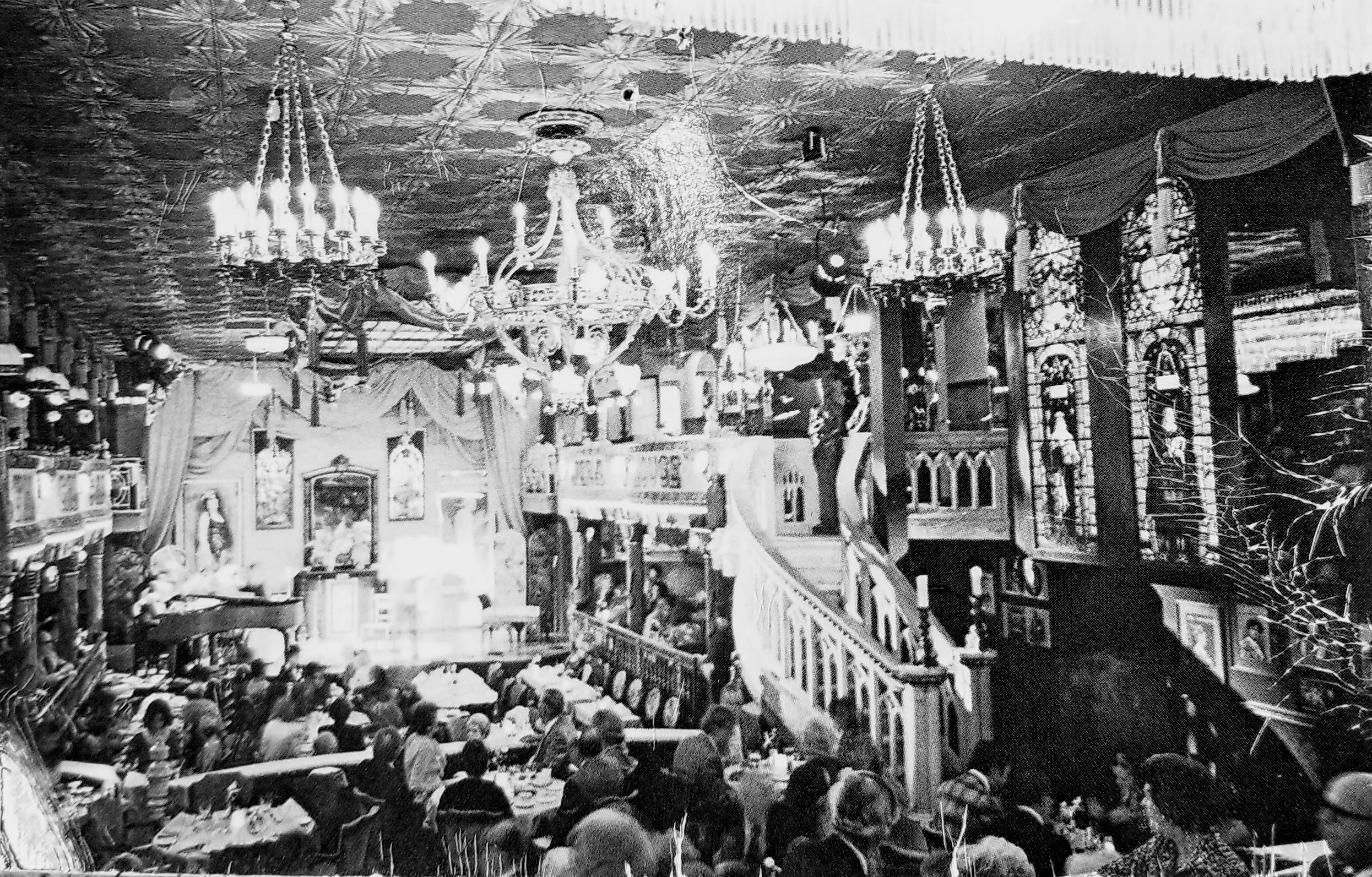
The Great Caruso, one of the “seven wonders of the modern world”: Houston, 1979

In 1979 I was the very young dining room manager of Houston’s premier entertainment-focused restaurant, The Great Caruso, a 235 seat palace of ostentation that featured live entertainment (including the waitstaff) with a house band and an array of local musical talent.  It was fashioned with architectural oddities and treasures from around the world (a massive, 2 story white marble circular staircase graced the center of the room) and a FOH staff of 30 including 18 busboys all from Iran, all under my inexperienced management.  The Great Caruso was a white tablecloth venue of the old school with an excellent menu (we still cooked a few dishes at the table in those days), a top notch wine list for that time (heavy on the French as CA had not come into its own yet) with a full time wine steward (one of the waiters replaced me when I was promoted).  We hosted political royalty and celebrities on a daily basis and anyone who walked in here knew they were in for a special evening.  The wait staff was primarily women and a mix of straight and gay men (all of whom taught me how to dance at the gay discos after the shifts), the busboys were Persian and there was me in the middle.  It was one of the most exhilarating times of my life as all of us were bonded by an esprit de corps that hospitality workers can really appreciate.

The busboys all attended an engineering college nearby and the restaurant was like their second home.  We would all get together and play Texas Hold-em on Sunday nights after the shift (they were incredibly aggressive bettors) where they would teach me words in Persian and I reciprocated with American idioms. I was ok with a few of them doing a few “slides” of a specific hallucinogen from their home country upstairs near the lockers after shifts. If they were caught doing it at school they would be expelled and returned home, a great shame to their families.  So they came to work to get high.

So many of them were named “Ali” that they were assigned numbers which they took great pride in – Ali 1 through 6. It started as a joke but they completely owned it.  One time, when Ali 2 had graduated and went back to Iran, we had a council on whether or not a new Ali could claim his number or go to #7.  In this case, Ali 2 was held in great esteem so it was determined that Ali 7 would be created.  A few days later, a few of them approached me before a shift with something in their hands wrapped in tissue paper: a beautiful scrimshaw etching of an ancient Persian polo match, framed in a handmade frame of Persian design, proof of their cultural contribution to the world.  “Mr. Robin” had gained their respect.  Being so young and inexperienced in the real world, I was touched beyond belief and it remains one of the lasting treasures that I have near my desk in my office.

Hand-etched on scrimshaw with handmade frame: the origins of Polo in ancient Persia

Over a period of a few weeks, I began to see a pattern emerge…many of them weren’t coming to work on Sunday nights.  I always took great care to manage the work schedule around their studies and tests, religious observances and trips back home, but I was now getting hammered by the GM, the maitre d’, the owners and the waitstaff.  Even though Sundays were the lightest nights of the week, our level of service was rigorous and the lack of busboys was causing seams to show.  When they came in for service, I approached them in the locker room and made a general announcement that we needed them to show up for their assigned shifts and made a vague threat that their jobs were at risk.  They all nodded in agreement but it was obvious something was going on and the following Sunday, I had 2-3 no-shows.  Ali 5 did show up and after the shift I asked him what was going on.

He explained to me that all the others were at the mosque praying.  I wasn’t aware that Sunday evenings were now part of their prayer cycle but he said this was something special.  “We are praying for our deliverance”, he said, “for the return of our beloved Ayatollah Khomeni”.  He went on to explain who this man was, about his exile in Paris and how all Persians hated the current Shaw of Iran, who was a tyrant and blasphemer in their eyes.  The Ayatollah, an honorific bestowed upon the upper echelon of holy men, was a prophet and would lead the current Iran to its proper place as it was in ancient times, when it was once called Persia.

Over the next few weeks I was torn between my affection for them, my curiosity for their prophet and my duties as a manager. I was reading small articles in Time magazine about this man and the excitement he caused by all these young students.  I remember having some difficult interactions with the busboys and the wait staff over the constant absenteeism.  At one point, Bassam, who was definitely the coolest of them all (probably because he exhibited the most Western behaviors) stood up at a staff meeting and demanded a higher cut of the tips.  The other busboys all agreed, and I realized this was a planned insurrection.  I could see the headwaiter slowly shaking his head and knew that I would soon be over my head.  In the next few weeks it turned into a shit show with the GM and owners pressing me to “solve the problem” which I clearly did not have the experience to do.  I think at one point I had the whole staff, front and back, pissed off at me. 

The drum beats of revolution were now pounding heavily in far-off Iran, it was a constant staple on the evening news and Chronicle headlines.  A noticeable change came over the entire bus staff, they were solid on their demands for more money and they were staging a kind of “blue-flu”: chronic absenteeism, reluctance to do any extra work, surly on personal interactions.  Not all of them, but most.  Mike, one of the older waiters who was an Iranian/American, pulled me over one night and said, “Robin, this ain’t going away.  They’re fired up over this Ayatollah guy and you’re either going to have to fire them all or find some other money for them”.  It was a Hobson’s choice, no choice at all.

Deliverance came for me when the GM called me up to his office at the end of a Thursday evening shift and told me that this wasn’t working out and my last day as a manager would be Sunday night, after I locked up.  I could either come back as a waiter or find another job.  They wouldn’t be hiring anyone to take my place for a while and he was going to assume my duties.  On Sunday evening, after I locked up, I went out to my car and the entire wait staff was waiting for me in the parking lot.  They said, “get in your car, we’re heading to a bar to celebrate your last night” and when I turned, it looked pretty weird.  Jeff Sherrill, the MC who ran the show at the restaurant from an overhead  booth and one of my better friends there, filled my entire car with popcorn, the entire interior.  I opened the door and it fell out into the parking lot and the staff pulled out a couple cases of beer and we celebrated.

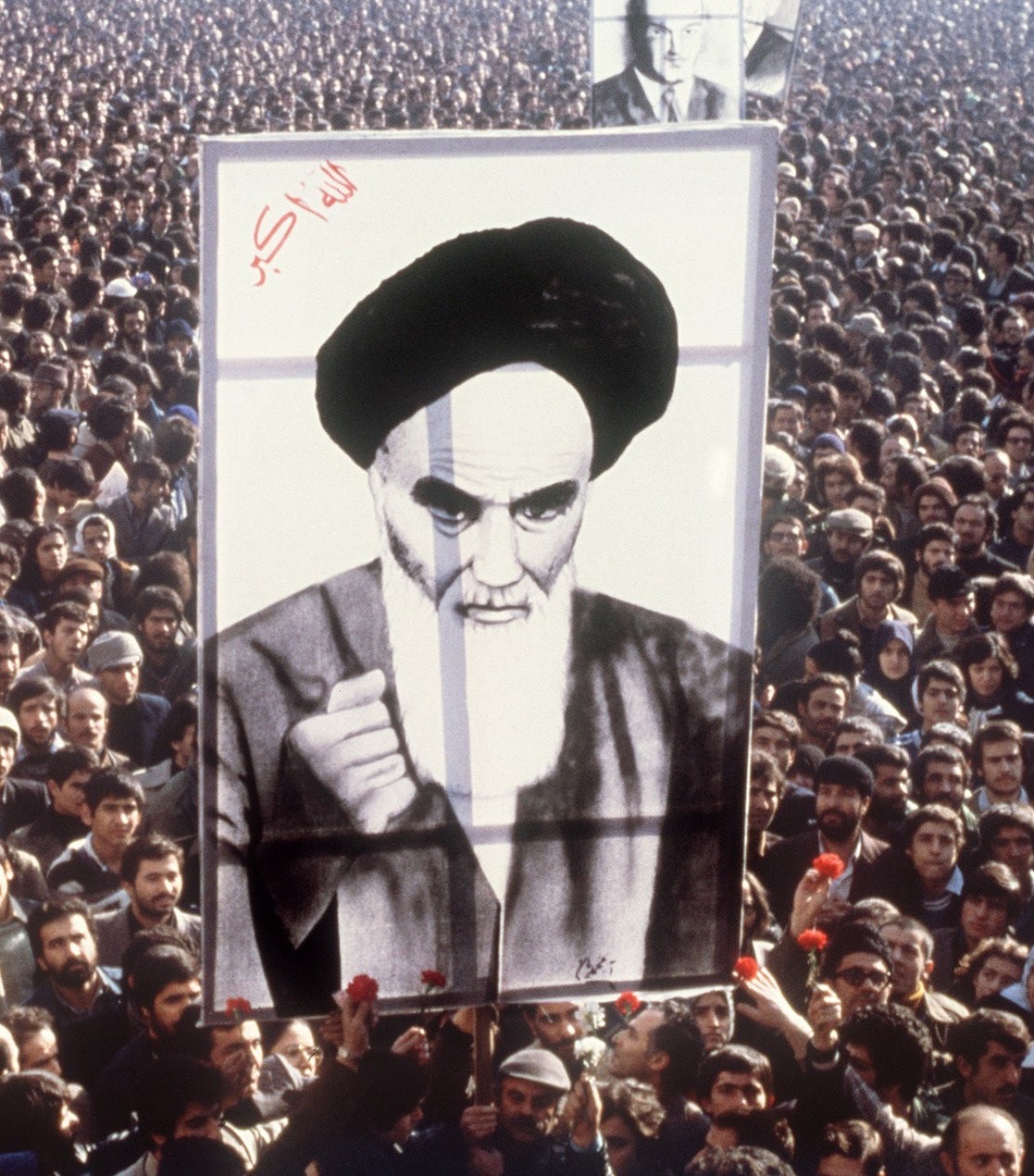
Within a month, the Shaw of Iran fled the country to the US as Ayatollah Khoumeni returned from exile and started the Islamic Revolution. It was February 11, 1979.  By November that year, the US Embassy was attacked and American hostages were held until 1980 after Reagan took his oath of office.  The anti-Islam sentiment had come to America and took root and I heard that one by one each of the busboys was fired from the Great Caruso.  All except for Bassam, who had “converted” to Westernism and denied his Iranian heritage.  The next few months I was glued to the TV, magazines and newspapers, looking intensely at the pictures of the crowd of young “students” staging marches, holding and parading the hostages and chanting “Death to Carter” and “Death to America”.  I think at one point I saw Ali 5.

Tehran, Iran: 1979

The Reason Why Your Whiskey Can and Should Come from Pot Stills, Column Stills, Chamber Stills, Alquitars, Pots with Dephlegmators, Coffee Stills, Pots with Retorts, and Hybrids. Or, how arguing pot vs. column will never broach the complexity of the distilling arts.

A super-intense rundown between the pluses and minuses of column, Coffey and pot distillation.

bishopshomegrown's avatarThe Alchemist Cabinet

640px-Coffey_Still.JPG

Back in October Max Watman posted an article to the Daily Beast (https://www.thedailybeast.com/the-reason-why-your-whiskey-should-come-from-a-pot-still) titled “The Reason Why Your Whiskey Should Come from a Pot Still”. As a Pot Still, devotee and specialist I certainly appreciated his take on the subject, however there were some technical mistakes in the perception of “Column Still” distillation. Max Watman’s mistakes were based on the fact that he simply took the word of Irish distilling giant John Powers from his testimony that was recorded in the infamous “The Final Report of the Royal Commission on Whiskey and Other Potable Spirits” in the late 1800’s and Power’s subsequent “damnation” of the continuous column to mean that Powers was damning all types of column stills (he most certainly was! However, he likely didn’t fully understand their capabilities) and subsequently Max Watman simply didn’t make the distinction that “All Coffey Stills are columns but not all columns are…

View original post 4,432 more words

My Last Facebook Post: 12/31/17

This is the last ride out. Its said that the chronometer, or the modern clock, was invented by ancient monks to keep track of their prayer cycle. Before that, the earth made its way around the sun as it spun on its own axis and ancient observers broke the long arc of life into years and days. The Greeks tracked the sun’s shadows and the Romans split the shadows into quarters, but throughout, time was fungible. It was manipulated around our human activities whether they be legal, cultural or social. In effect, we controlled what time did to our lives. But the monks changed that: as time became trackable, as the quarters were dissected down to hours and minutes and seconds, time became secular, agnostic and in a very real way, in control of us.

chronos

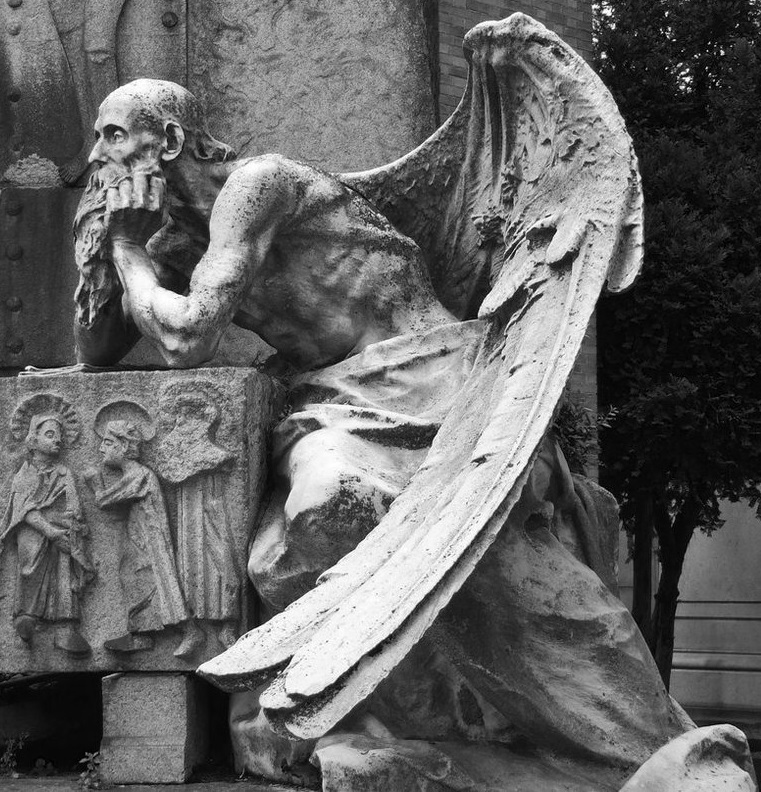
Chronos contemplating your destruction

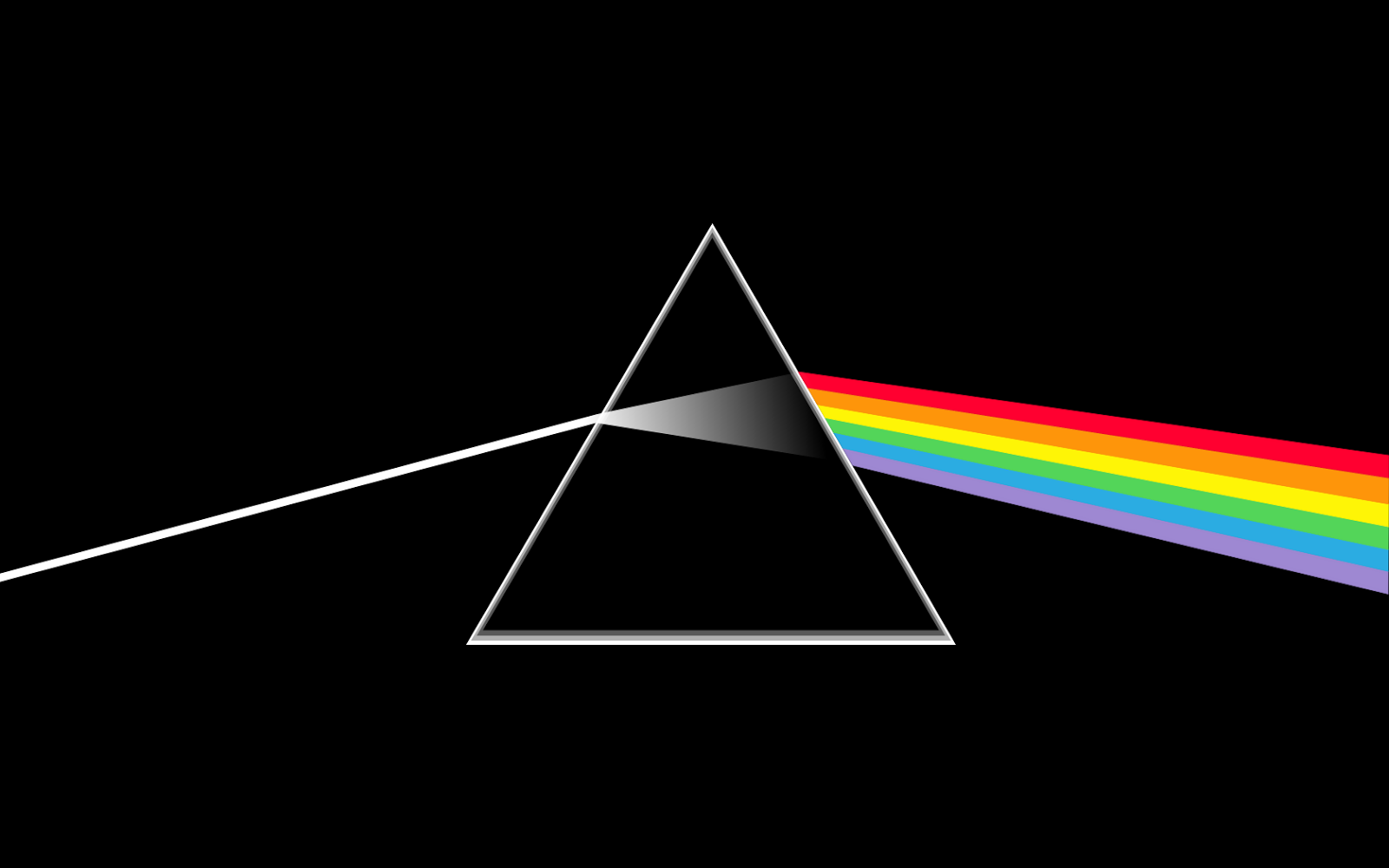
As humans, we are split between living our lives in kairos time or chronos time. Inevitably, chronos time is imposed upon us or mostly, we impose it upon ourselves. We are pushed and punished and rewarded by the chronometer, we look back at the chapters of our own chronology and make assessments on our worth and invite others to join in: at this point I did this, at that point I did that. We impose deadlines, mark appointments and coordinate our calendars in an effort to meet expections determined or undetermined, expecting reward or fearing punishment for the slightest adherence or disobedience to the artificiality of it. But it is for naught. In Troilus and Cressida, Shakespeare says: “time hath, my lord, a wallet at its back, wherein he puts alms for oblivion, a great sized monster of ingratitudes. Those scraps are good deeds past; which are devour’d as fast as they are made, forgot as soon as done.” pink-floyd-dark-side-of-the-moonHundreds of years later, Roger Waters of Pink Floyd at the tender age of 29 writes preciently: “…you are young and life is long, and there is time to kill today. And then one day you find, 10 years has got behind you, no one told you when to run, you missed the starting gun.” And we run and we run to catch up with the sun but its sinking. Certainly John Lennon understood this futility when he said, “Life is what happens to you while you were making other plans”.  Chronos time is road rage and impatience with others: you’ve interrupted my race with the clock and you are now my enemy.
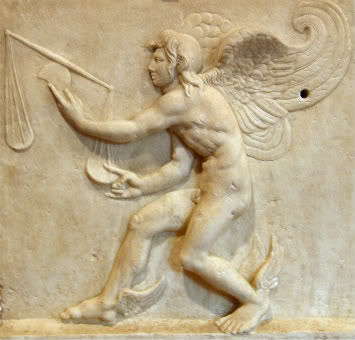
kairosThe other part of time then is kairos time. This is the ancient time, the time of the Jews and early Christians, the time of the ancient Chinese lords, the Vedic shaman and sub-Saharan tribes. It is the time that is fashionably being recreated amongst the cognoscente as “mindfullness” (which in reality is a great business plan to separate people from their money by teaching them to sit still). But it is not that. Kairos is the space of time where lovers gaze, where mother and child become one, where you can hear your own heartbeat and in that, your own destiny. It is your silent vigil during the agony of a friend’s loss or your constantcy next to a loved one’s triumphful moment. It is the contemplation of your own mortality as a strategy for being alive. As Jerzy Kosinski knew of Chance the gardner, it is simply “Being There”, whether its sitting in the car with your child next to you or actively participating in play with your friends.  Children live in kairos time because kairos makes the most out of the time that we are in: not the minute that just passed, not the day that is to come, but that exact moment we are living in, not peeking away at a smartphone, not responding to a bell, not allowing a gnat’s distraction to interrupt a meaningful conversation. Kairos time is its own reward, it doesn’t need likes or stars or the glowing embers of someone else’s clock. Actors are trained to “be in the moment”, open and receptive to immediate stimuli that allows them to respond in an appropriate way to find their way to a truth. If not, they’re caught “faking it”.  An athlete must live in kairos or else she will falter.  August | 2012
In Fight Club, Tyler Durden spends hours dragging driftwood logs into position on a beach in a seemingly futile action until: “What Tyler had created was the shadow of a giant hand. Only now the fingers were Nosferatu-long and the thumb was too short, but he said how at exactly four-thirty the hand was perfect. The giant shadow hand was perfect for one minute, and for one perfect minute Tyler had sat in the palm of a perfection he’d created himself. One minute was enough, Tyler said, a person had to work hard for it, but a minute of perfection was worth the effort. A moment was the most you could ever expect from perfection.”
Personally, I need to reclaim the kairos in my life and to better understand the work that goes into living and appreciating those perfect moments. I always tried to live in the balance, but to be honest the last few years in the face of social media have been too much, not only for me, but for those I’ve seen and heard around me. I believe with everything that’s in me that there is little inherent value in Facebook or Twitter on a personal level, but I’ve allowed myself to succumb to the mythology created by a 23-year old nerdy kid who just wanted to score with girls, I’ve let him convince me that I should sell him my soul to do so. I bought into it.
But now as I prepare to go through the pangs and spasms of withdrawal, I’ll invite you to do the same. There’s value in finding ways to communicate and keeping abreast of each other’s lives, but in reality, I don’t really deserve to have 1,335 friends. I’ve done nothing to earn that friendship other than to post some witty sayings, re-post NYT articles and rant about things I dislike. I’m a person who has always believed in the value and beauty of people, but Facebook especially has showed me sides I wish to no longer view as it has weakened my love for you all. There is a place in business for FB and other social media and I have to navigate that as best as possible, but from a personal level, I believe its more destructive than positive.
So, this is the last FB farewell, at the peak of the sun on the last day of the year. May your next chronological trip around the the glowing ball be filled with kairos; that you gather and fill as many perfect moments as possible and that each of those moments are shared with those who enhance your life. As William Saroyan instructs us, “In the time of your life, live — so that in that wondrous time you shall not add to the misery and sorrow of the world, but shall smile to the infinite delight and mystery of it”.

The World is no longer Flat

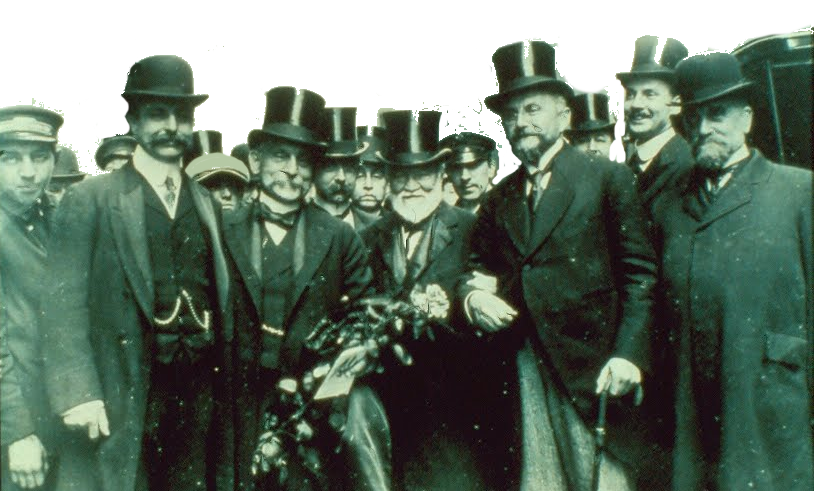
robber_baronsIn the Gilded Age, the then powers of industry – Gould, Morgan, Mellon, Rockefeller, Ford, Carnegie, Vanderbilt – consolidated the means of the industrial economy into the hands of an oligarchy who controlled the actual wealth of the United States. The means at that time were steel, oil, railroads, transportation and banks. Wealth has nothing to do with being rich, it has everything to do with the power to bend the arc of history to one’s desired end point. For the first time in human history, non-royal entities, these Robber Barons, were able to consolidate and use wealth to affect the outcome of ordinary lives, not only in this country, but around the world, without ever having fired a shot or burned a village. To provide justification and prevent a natural backlash from those who were conquered, and this was indeed a conquering, they utilized an ancient method of control: mythology. They created the mythology of the self-made man, the Walter Mitty, the rise-from-the-gutter-into-the-penthouse kind of person, who through their own pluck and persistence, hard work and sacrifice, were able to pull themselves by their bootstraps into a position of dominance over their own meager environment. It was one of Aristotle’s classic dramatic constructs from ancient times: man against the world, now writ large and in real time, but this time married with the freedoms granted by this new country, only 100+ years old, that insisted that all men were created equal.

To assuage the victims of their economic dominance, to keep them in voluntary compliance, and to ease their own consciences (because no matter their province, they were still men of their times), they created philanthropic institutions dedicated to the virtues of this mythology: educated mind, healthy body, uplifted soul. They established trusts and charities, erected grand cultural temples, endowed their names on educational and athletic structures to give the people new gods to worship: knowledge, culture, chastity and fidelity all in the pursuit of one thing: wealth. In doing so, they enlisted the energies of the conquered to maintain their position of wealth, because the underlying message of the myth was: you can do this too. If you follow in my footsteps, you can get here, you will have arrived. If you sacrifice, save, stay sober, be industrious you too can get to the top.

The entirety of the 20th century is based on these ideals, where the arc of human history is either an acceptance of these principals (Wall Street, enterprise, diligent capitalism) or a rejection of them (Marxism, communism, despotism, socialism).

Prometheus

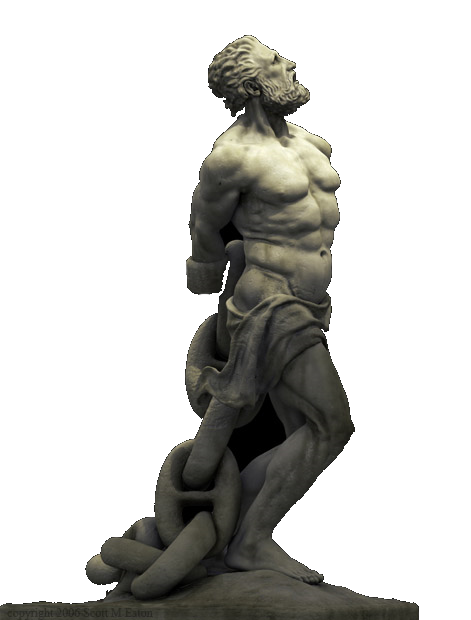
But in the 21st century we find ourselves faced with a sadder truth: that this mythology was indeed a lie, that the system was rigged from the very beginning. We found there is no real equality, we are just playing out a 1000 year old class system that was written anew in the mountains and prairies of a new world. When we add the negative values of racial, ethnic and gender discrimination, values that are not uniquely American but are magnified through the prism of wealth, we find the system is rigged to promote inequality, to make sure that the vast majority of the people stay in voluntary servitude, bound to their rocks like Prometheus, baring open their chests so that the wealthy can rip out their hearts again and again.

There was one chance to change things, one opportunity to balance out an imbalance. It was a game changer like the world had never seen, a huge wave of egalitarian opportunity that was initially open to everyone who could find the keys to its access, in spite of their station, regardless of their country of birth. It was called the internet and in its short life, it created ripples from a small pool that had the power to capsize ocean liners across the globe. It was the equalizer that the ancient and modern world had never seen before, because even those who didn’t access it directly were indirectly affected by its use in ways they were unaware of. It moved through our lives in the way the slippery bonds of spider’s web eases itself into its host environment. It was ubiquitous, unusually so. Its price of access was small in comparison to the benefits that could be gained from it. Its power was in its virtual unfathomable depth, an endless world where new discoveries were made, where the promise of more was inherent in its use.

tugofwar2

And even though we infantilized it, even though it grew so fast and we embraced it so quickly that we easily took it for granted; even though we mis-used it and abused it, it was the one gift, the one key to lay power bare and truly make the world flat, to even out centuries of wealth dominance.

But we lost it. And even worse, we didn’t know and most of us didn’t care.

That’s what the end of Net Neutrality means. Now, instead of names like Rockefeller and Ford and Carnegie, which in spite of their excesses and human failings, were at least human; we have the faceless, ever-hungry maws of AT&T, Verizon, Comcast and a few other Oligarchs of the New Age, buffeted by their stock price and over-stuffed executive boards made of the wealthy few. With 75 years of wealth-generation, starting from the end of WWII, the tiny faces behind these global entities will now dictate, through supply-side economics, our ability to navigate through the world of the future. The toll roads of the New Jersey Turnpike have been moved into our living rooms and in our pockets and handbags, patrolled by an unseen paramilitary force that will prevent access or determine your route through economic means.

And we don’t care.